


Sàn giao dịch tiền mã hóa Binance vừa hứng chịu cuộc tấn công mạng gây thất thoát ước tính 6,3 tỷ USD qua một máy tính kỹ sư DevOps bị xâm nhập. Các tổ chức bảo mật quy kết trách nhiệm cho nhóm hacker TraderTraitor của Triều Tiên, trong khi các đơn vị phát hành stablecoin đã phối hợp phong tỏa khoảng 3 tỷ USD.
The world's largest cryptocurrency exchange Binance was hacked with total estimated losses reaching up to $6.3 billion in an unprecedented cybersecurity incident1,2. Security analysts assess this as the largest asset theft in the history of the cryptocurrency industry, taking place within a span of about 20 minutes5.

Photo: LibreOffice Start Center, macOS 13.5.1, LibreOfffice 7.6.0.3 – Fantasiasod, CC BY-SA 4.0, via Wikimedia Commons.
Chi tiết vụ tấn công và nguồn gốc lỗ hổng kỹ thuật
According to the initial announcement from Binance, the incident originated from a compromised DevOps engineer's laptop at the exchange2,3. The attacker exploited this device to access service containers and execute unauthorized withdrawal transactions2,5. However, the exchange stated that it has not found any evidence indicating that the system's private keys were exposed1,3,5.

Photo: Cyber Security Awareness Month (4838455) – U.S. Army USAG-RP by Mary Davis, Public domain, via Wikimedia Commons.
Analytics firm TRM Labs and blockchain security company Elliptic both attributed the incident to the North Korean-affiliated hacker group TraderTraitor2,5. TRM Labs reached this conclusion with high confidence based on on-chain and off-chain intelligence, while Elliptic noted that a portion of the stolen funds flowed to the same wallet address that participated in the previous Bitget exchange attack2,5. Regarding the Bitget incident, TechCrunch cited loss figures of $351 million, while the Financial Times recorded damages of nearly $390 million1,5.
Currently, information regarding deposit statuses varies among sources. Engadget cited a Binance post affirming that deposit activity remains "normal" despite withdrawals being halted2. Conversely, The Register and TechCrunch reported that the exchange has suspended both deposits and withdrawals to facilitate recovery efforts3,5. Binance co-founder Yi He stated on social media platform X on Friday morning that the exchange expects to restore withdrawal features within the next 48 hours1.
Quy mô thiệt hại và nỗ lực phong tỏa dòng tiền
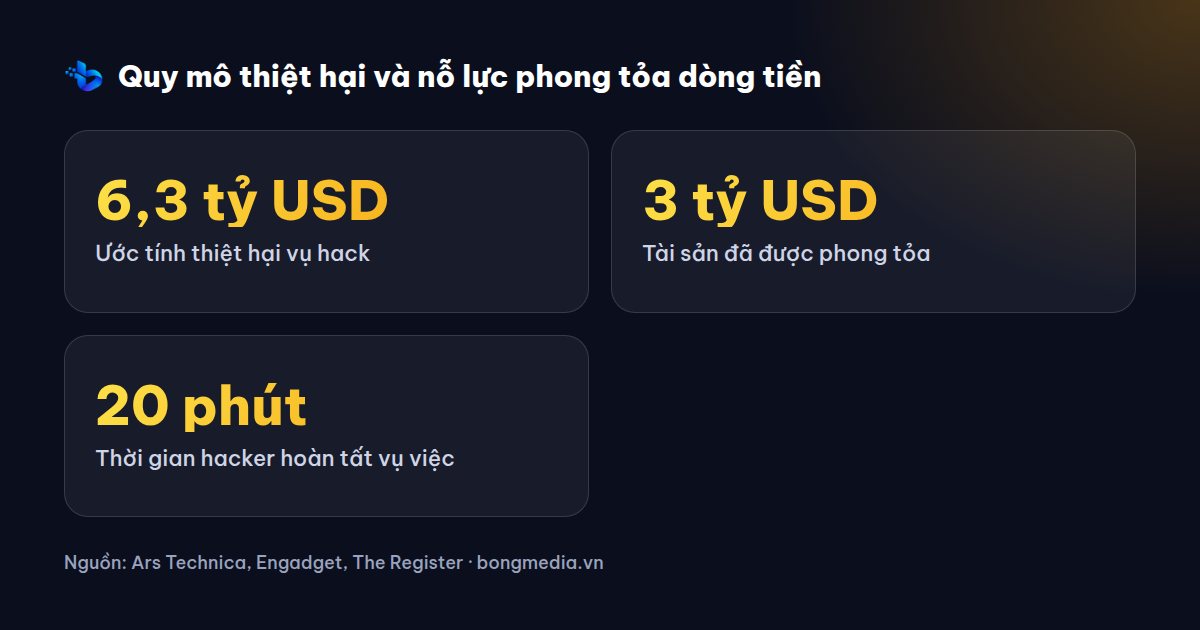
The $6.3 billion scale of the incident far surpassed the previous major theft at the Bybit exchange in 2025, which was recorded by Engadget at $1.5 billion and cited by TechCrunch at $1.4 billion2,5. Binance representative Andie Cooper and reports from the exchange indicated that approximately $3 billion has been frozen on-chain through coordination with industry partners2,5. Analytics firm Elliptic verified $2.8 billion in frozen assets, mostly in USDT and USDC, but warned that the perpetrators managed to transfer the remaining amount to un-interferable tokens such as ETH1.
Photo: Ethereum Background – Stanley Osorio, CC BY 2.0, via Wikimedia Commons.
On the stablecoin issuers' side, Tether CEO Paolo Ardoino stated that the company has frozen about $1.5 billion in USDT1. Circle CEO Jeremy Allaire also confirmed the freezing of $800 million in USDC related to the attack1. Notably, former Binance CEO Changpeng Zhao cited conflicting figures on social media platform X, thanking Tether for freezing approximately $971 million and Circle for about $823 million2.
Binance has committed to using the SAFU fund (Secure Asset Fund for Users) along with internal capital to cover all losses, while affirming that user assets remain secure despite not yet publishing a new proof-of-reserves audit report2,3,5. Nevertheless, Tim Sun, a senior researcher at HashKey Group, told Reuters that this incident could reduce market risk appetite and prompt investors to reassess liquidity and counterparty risks on centralized exchanges2.
Cảnh báo an ninh chuỗi cung ứng thiết bị tại Đông Nam Á
In addition to risks on centralized platforms, the Southeast Asian regional market has also recorded hardware-level security warnings4. Cold wallet manufacturer Trezor recently issued a warning regarding suspected malicious tracking components implanted in Trezor Safe 5 devices distributed by retailer CryptoBilis in Southeast Asia4. The concern arose after a customer in Indonesia purchased a device via the Tokopedia platform in August 2026 and discovered a strange circuit board with an antenna and cellular module located between the screen and the main board4.
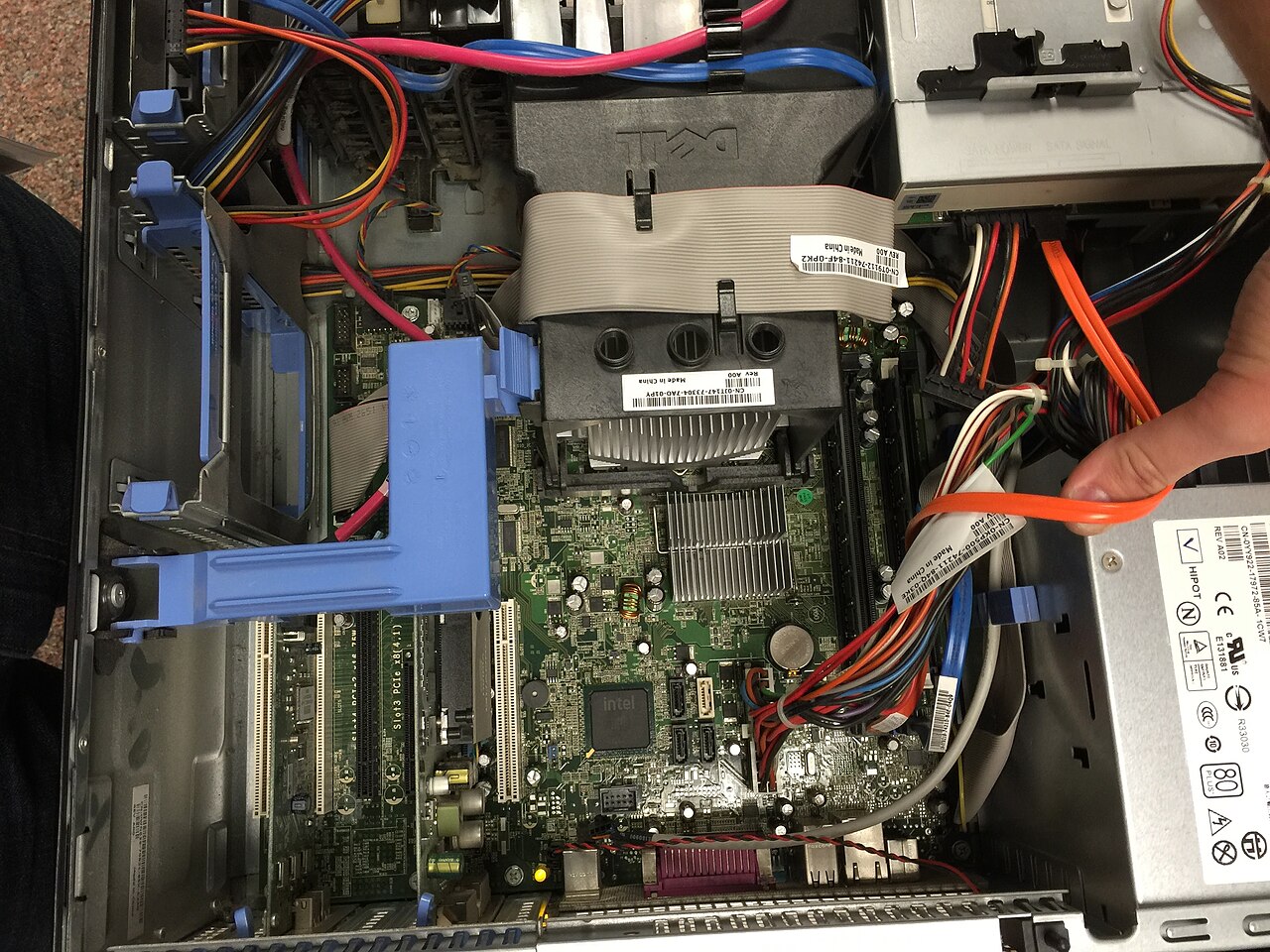
Photo: Computer motherboard 11 – Kurt Kaiser, CC0, via Wikimedia Commons.
CryptoBilis is also the retailer linked to the hardware chip implantation incident on Ledger devices in early October 2026, an event that led Singapore police to record an additional $3.5 million in damages4. Trezor stated that it stopped selling devices via CryptoBilis starting October 9, 2026, and recommended that users do not initialize or continue using devices purchased from this unit since March 20264.
Vizy's take
According to Vizy, the breach into Binance's ecosystem has exposed critical bottlenecks in internal control architecture among large-scale digital asset institutions. Even though exchanges invest substantial resources into blockchain technology, the weakest link can still reside in ordinary endpoints such as technical staff workstations. The fact that privileges from a single DevOps workstation were sufficient to trigger billions of dollars in withdrawal commands demonstrates that decentralized models and automated transaction monitoring still possess numerous operational vulnerabilities that need resolution.
Vizy believes that for businesses and investors in Vietnam, this incident provides a major lesson on digital asset custody risk diversification. When both centralized exchanges and hardware wallet supply chains in the Southeast Asian region record interference risks, relying on a single storage method poses very high risks. Domestic enterprises operating in the technology sector may need to review internal access policies, adopt multi-signature verification mechanisms, and strengthen supply chain security checks before allocating corporate assets into these digital infrastructures.
Sources
- Ars Technica – Hackers steal $6.3 billion from Binance in record crypto heist (2026-10-30)
- Engadget – Binance hacked for an estimated $6.3 billion in record crypto theft (2026-10-30)
- The Register – In the year AI re-wrote the infosec rulebook, it’s comforting to know crypto exchanges still have bad security (2026-10-30)
- BleepingComputer – Trezor warns of suspected crypto-theft implant in hardware wallet (Fri, 30 Oc)
- TechCrunch – North Korean hackers blamed for stealing record $6.3B in Binance breach (2026-10-30)
Compiled and analysed by Vizy from the sources above and reviewed by a Bống Media editor before publication. "Vizy's take" is the author's own opinion. For information only, not investment advice.
FAQ
What caused the Binance exchange hack?
Initial investigations by Binance showed that hackers seized control of a DevOps engineer's laptop, subsequently accessing service containers to execute unauthorized withdrawal transactions.
Were Binance user assets completely lost?
Binance affirmed that user assets remain safe and committed to using the SAFU reserve fund alongside company finances to cover all incurred damages.
How much of the stolen assets have been recovered or frozen?
Approximately $3 billion has been frozen on-chain thanks to swift interventions from stablecoin issuers like Tether, Circle, and industry partners.