

The Ministry of Education and Training has issued and oriented a series of new regulations regarding the application of technology in education, changes to university admission methods, and the deployment of technology scholarships starting from 2027.
In early November 2026, the Ministry of Education and Training (MOET) and major educational institutions announced several important directions and regulations regarding the application of technology in management, examinations, admissions policies, and scholarships1,2,3,5. These changes aim to concretize the spirit of fundamental educational innovation according to newly issued resolutions and legal documents1,5.
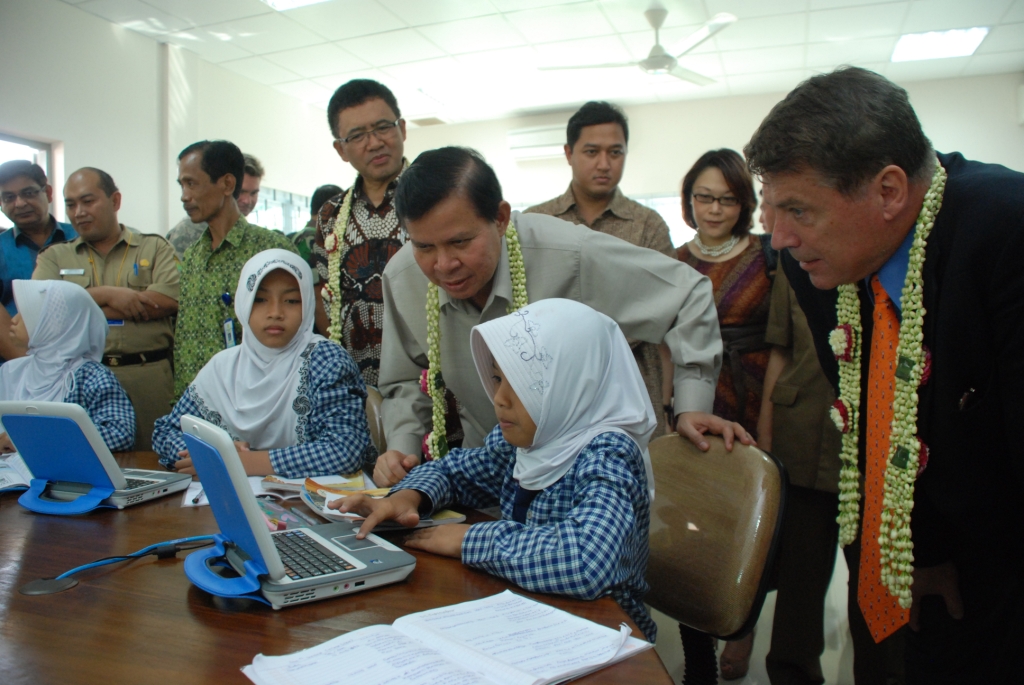
Photo: Information Computer Technology (ICT) Lab (4874427187) – USAID Indonesia, Public domain, via Wikimedia Commons.
New points on evaluation regulations and the application of technology in examinations
MOET has issued Circular No. 89/2026 amending and supplementing regulations on evaluating primary, lower secondary, and upper secondary students, officially permitting periodic tests to be conducted on computers provided that adequate infrastructure, information technology, and software conditions are met3. According to Huynh Van Chuong, Director General of the Quality Management Department, the spirit for 2027 is to maintain the stability of the high school graduation exam while enhancing security through technology such as cameras, scanning systems, and anti-cheating solutions utilizing artificial intelligence (AI)1. The roadmap for conducting the high school graduation exam on computers will be piloted in Hue City in 2027, further trialed in 2028 - 2029 before synchronized deployment1.
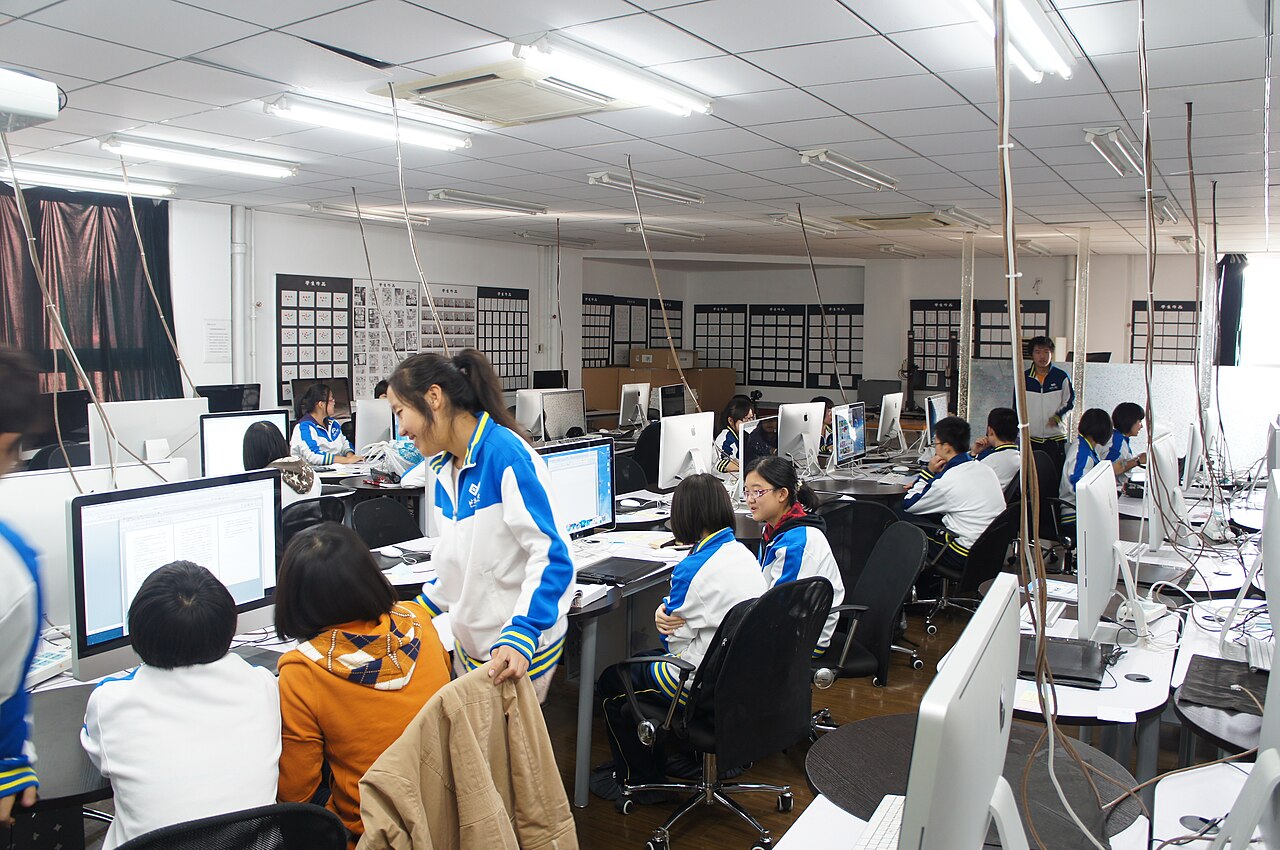
Photo: Apple Computer Room of BNDS – Cat Under Stars, CC BY-SA 3.0, via Wikimedia Commons.
Additionally, Circular No. 89/2026 stipulates that digital school records officially become a component of the student evaluation dossier, utilizing the digital signatures of subject teachers and homeroom teachers instead of manual record-keeping and stamping on paper records during the transition period3. Departments of Education and Training are also assigned to lead the development and appraisal of common periodic test papers for concluding grade levels such as grades 5, 9, and 123.
2027 University admission orientations and strategic technology scholarships
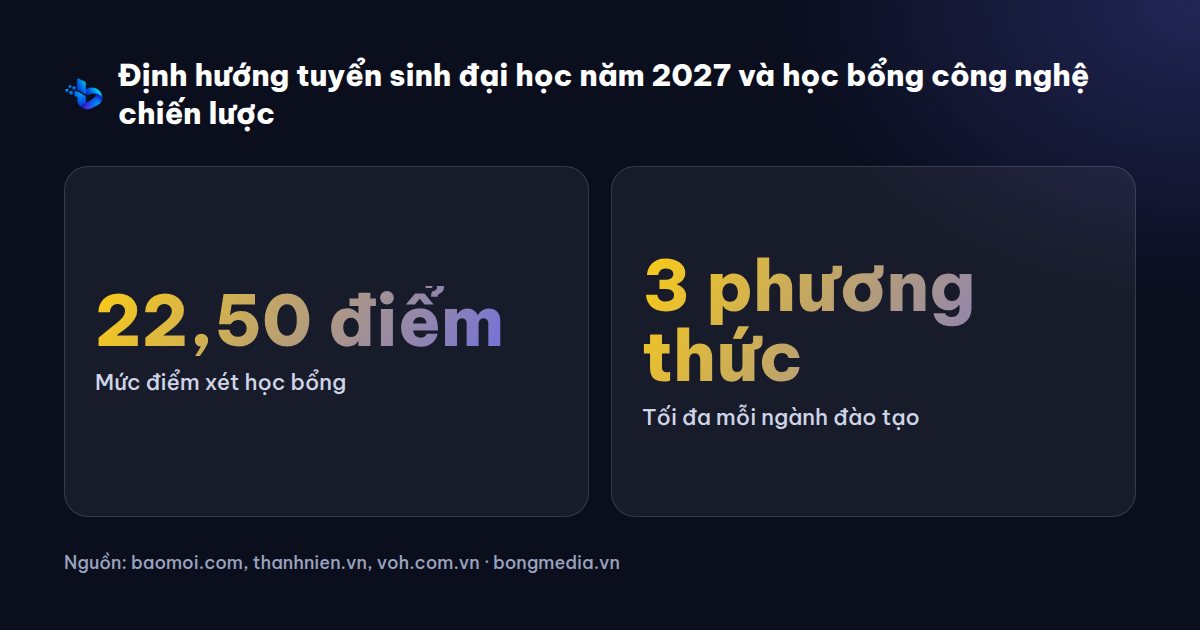
In the 2027 university admission process, MOET is expected to regulate that each higher education institution may use a maximum of 5 admission methods, and each major or training program may apply a maximum of 3 methods2. Vietnam National University, Ho Chi Minh City is oriented to apply a comprehensive admission method with a unified formula framework based on high school graduation exam results, competency assessment exams, school records, and other criteria, in which competency assessment exam scores account for a high proportion2. This unit plans to organize 2 rounds of competency assessment exams on March 28, 2027, and May 23, 2027, with a scale of approximately 150,000 test-takers2.

Photo: The university malaya exam hall parking – Cerevisae, CC BY-SA 4.0, via Wikimedia Commons.
Also in November 2026, MOET issued Decision No. 3168/QĐ-BGDĐT (effective from January 1, 2027) announcing the list of majors, doctoral training institutions, and international standards serving the Project on Enhancing Lecturer Capacity4. Furthermore, according to Nguyen Tien Thao, Director General of the Department of Higher Education, the implementation of scholarship policies under Decree No. 179/2025/NĐ-CP and Circular No. 80/2026/TT-BGDĐT will apply a unified process on the national strategic human resource management platform5. Learners in basic sciences, key engineering, and strategic technology fields achieving 22.50 points or higher in the admission combination will be considered for scholarships without having to submit a direct application dossier5.
Vizy's take
According to Vizy, MOET's promotion of information technology applications such as digital school records, organizing computer-based tests, and preparing the online high school graduation exam roadmap demonstrates the determination to comprehensively digitize the education system. However, disparities in technological infrastructure between regions pose a major challenge for local authorities as they must proactively invest in equipment. Vizy believes that tightening regulations on university admission methods combined with centralized databases will help make admissions more transparent, reduce pressure on students, but requires secondary schools and universities to quickly adapt technically.
Sources
- baomoi.com – Đổi mới thi cử, nâng chất lượng tuyển sinh (2026-10-21)
- thanhnien.vn – Tuyển sinh ĐH năm 2027: ĐH Quốc gia TP.HCM xét tuyển tổng hợp, công thức thống nhất (2026-11-02)
- voh.com.vn – Bộ GDĐT sửa quy định đánh giá học sinh tiểu học, cho phép làm bài trên máy tính (Tue, 20 Oc)
- Cổng TTĐT Chính phủ – Xây dựng chính sách – Quyết định số 3168/QĐ-BGDĐT: Danh sách ngành, cơ sở đào tạo; giải thưởng chính thức các cuộc thi; bảng xếp hạng ngành, lĩnh vực đào tạo quốc tế (2026-11-03)
- Tuổi Trẻ – Học bổng ngành khoa học, công nghệ: Thí sinh đạt từ 22,5 điểm được xét thế nào? (2026-11-03)
Compiled and analysed by Vizy from the sources above and reviewed by a Bống Media editor before publication. "Vizy's take" is the author's own opinion. For information only, not investment advice.
FAQ
What new testing format does Circular No. 89/2026 allow?
The circular allows periodic tests to be organized on computers for lower and upper secondary students if technological infrastructure conditions are met.
When is VNU-HCM planning to organize its competency assessment exams in 2027?
The first round is scheduled for March 28, 2027, and the second round for May 23, 2027.
Do students receiving strategic technology scholarships need to submit an application?
Learners do not need to submit an application dossier for scholarship consideration because the process is carried out automatically based on the national database.